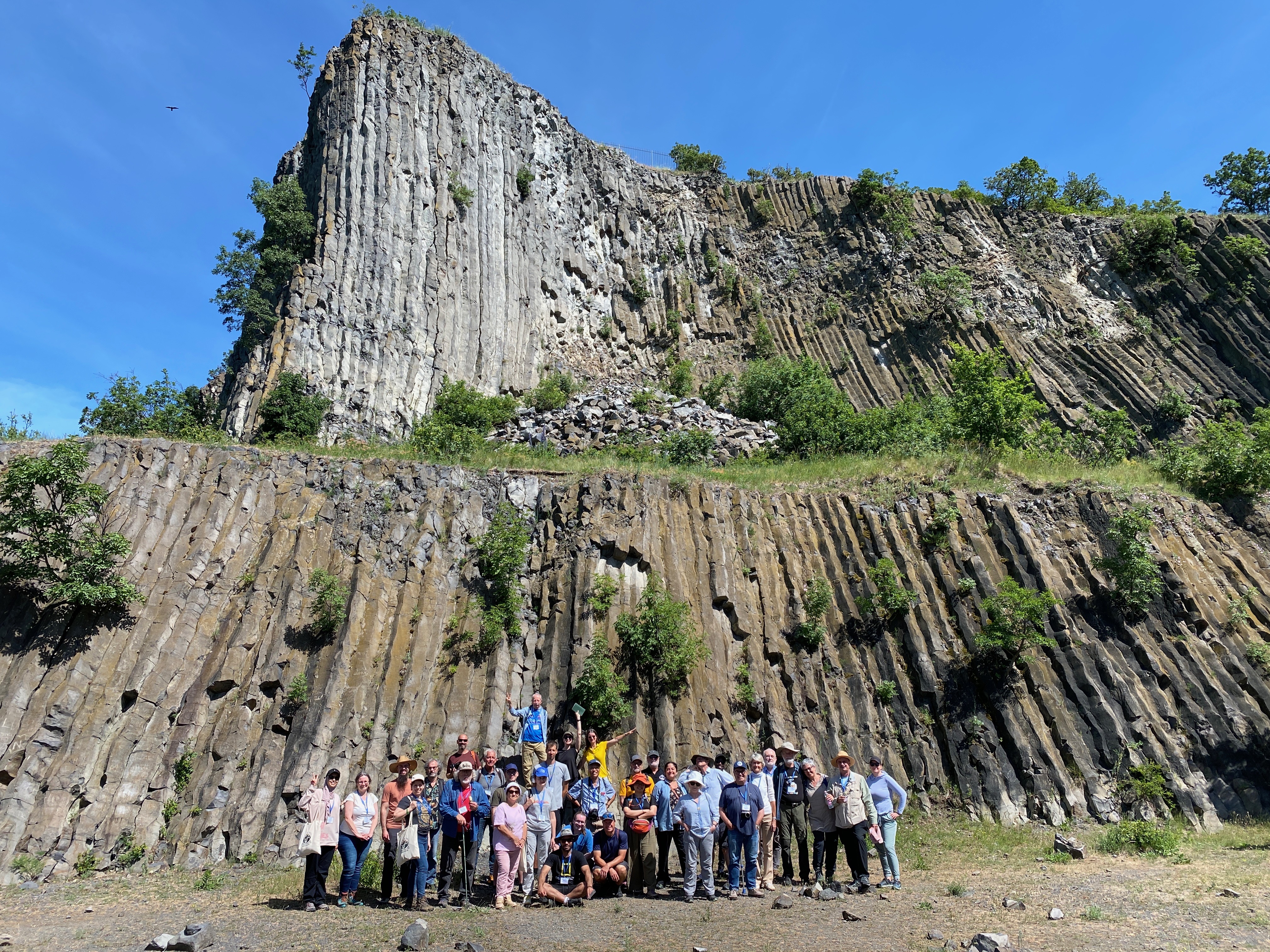


The IAVCEI Volcandpark 2026 Conference was held at HUN-REN Institute of Earth Physics and Space Science in Sopron, Hungary, between 26 and 29 May 2026, as an official event of the IAVCEI Commission on Volcanic Geoheritage and Protected Volcanic Landscapes. The meeting brought together more than 40 researchers, geopark professionals, educators, and geoconservation experts to discuss the scientific, educational, and societal value of volcanic geoheritage. We are very grateful for the support of IAVCEI, which helped strengthen the international visibility and scientific quality of the conference.
The scientific programme included two days of oral presentations, discussions, and networking activities. The sessions covered a wide range of topics, including volcanic geology from a geoheritage perspective, geodiversity assessment, geoconservation of volcanic regions, volcanic geoparks, geoeducation, geotourism, hazard communication, and the relationship between volcanic landscapes and society. The programme also included a roundtable discussion about the future and the possibilities in volcanic geoheritage research, and publication-related opportunities, creating an active and friendly environment for scientific exchange. Keynote speakers of the conference were: Joan Martí, Karen Holmberg, Paraskevi Nomikou, Benjamin Van Wijk de Vries, Maria Fernanda Martínez-Báez Téllez, Gino Gonzalez Ilama. Paula Naomi Irapta received the MDPI Best Paper Award.
A central element of the conference was the intra-conference field day on 27 May to the Little Hungarian Plain Volcanic Field. Participants visited the Kemenes Volcano House in Celldömölk, an important geotourism centre at the foot of the monogenetic Ság Hill. The visit introduced the volcanism of Hungary and the Carpathian Basin, as well as the geological and educational value of the 5.5-million-year-old Ság Hill basalt volcano. The field programme continued inside the former quarry of Ság Hill, where participants could directly observe the internal structure of a monogenetic volcano and discuss the links between volcanic processes, geosite conservation, and geotourism. The day concluded with the conference gala dinner and volcanic wine tasting at Somló, another iconic eroded volcanic hill.
The post-conference field trip on 29 May focused on the Bakony–Balaton Highland Volcanic Field within the Bakony–Balaton UNESCO Global Geopark. The planned stops included Tihany, Szentbékkálla, Hegyestű, and Szent György Hill, showcasing inverted volcanic landscapes, basalt columns, hydroclastic deposits, mantle xenolith-bearing pyroclastic rocks, volcanic necks, magma–sediment interaction, and maar–diatreme volcanism. These field stops provided an excellent opportunity to connect scientific research with geoconservation, geopark management, geoeducation, and the emerging theme of Deep-Earth Geoheritage.
Overall, Volcandpark 2026 successfully continued the tradition of previous Volcandpark meetings by creating a platform for interdisciplinary discussion on volcanic geoheritage and protected volcanic landscapes. The conference strengthened collaboration between the volcanological, geoheritage, geopark, and geotourism communities, and highlighted Hungary’s volcanic landscapes as valuable natural laboratories for research, education, and public engagement. We sincerely thank IAVCEI for its support and for helping make the meeting a successful international event.